Everything in your body moves. Your breath rises into your chest and sinks back down. The food you eat descends through your stomach and intestines. Blood circulates, fluids are lifted and drained, and every night your mind settles downward into sleep — then rises again, clear, in the morning. You rarely notice this choreography, but your body performs it thousands of times a day.
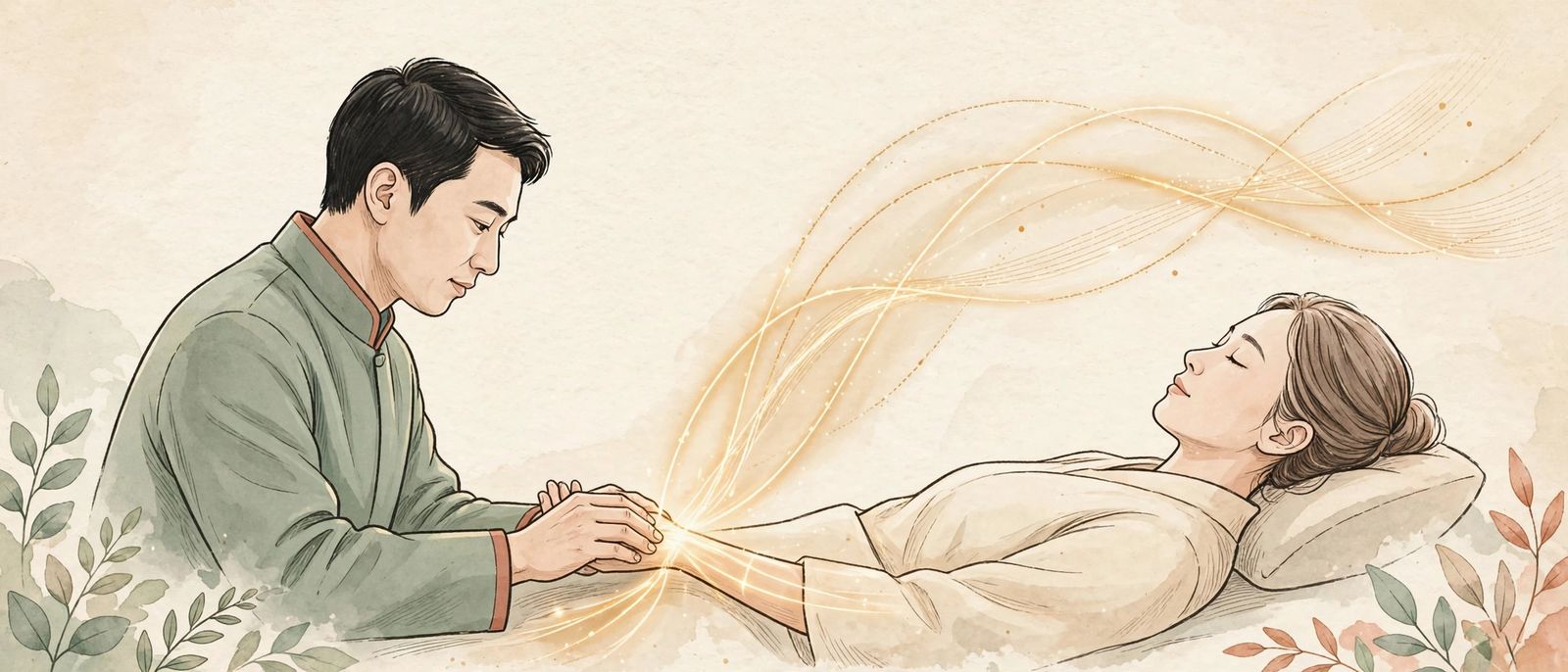
East Asian medicine describes all of this motion as the movement of qi — the body’s functional energy, the force behind every process that keeps you well. And like any language, the movement of qi has a basic grammar. It comes down to four directions, known in Korean as 승강부침 (seung-gang-bu-chim) and written 升降浮沈: ascending (升), descending (降), floating (浮), and sinking (沈).
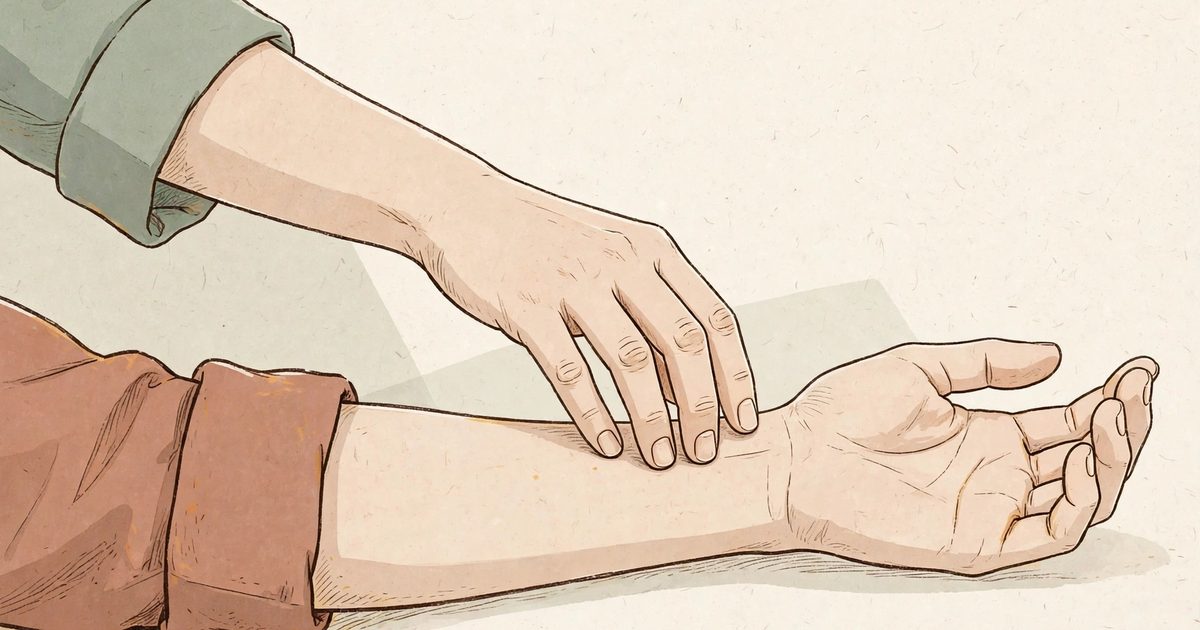
These movements are not abstract philosophy — a trained practitioner can feel them. Under three fingertips on your wrist, the pulse tells a story of what is rising, sinking, pushing outward, or retreating inward, and whether each is moving as it should. This article explains the four movements, what happens when they go off course, and how we read them. (New to pulse diagnosis? Start with Reading the Body Through the Pulse.)
01The Four Movements of Qi
Think of qi movement like weather: warm air rises, cool air sinks, winds blow outward, moisture gathers and condenses. Your body runs on the same physics of flow — and each of the four movements has its own job.
Ascending
seung · shēng — qi rising
Qi climbs upward, like steam off a cup of tea. The liver’s qi spreads and rises, and clear yang — the light, refined part of your energy — ascends to nourish the head, keeping your thinking clear and your senses sharp.
Descending
gang · jiàng — qi settling down
Qi settles downward, like dusk settling over a valley. The lungs disperse qi downward through the body, the stomach sends food down to be digested, and at night, descending qi is what lets the mind quiet into sleep.
Floating
bu · fú — qi moving outward
Qi moves from the interior toward the surface — toward the skin, the muscles, the body’s outer defenses. Floating is how warmth reaches your hands and feet, and how your body pushes a coming cold back out before it takes hold.
Sinking
chim · chén — qi moving inward
Qi draws inward and downward, from the surface into the depths — into the organs, the bones, the reserves stored by the kidneys. Sinking is the movement of rest, storage, and repair: energy gathered where it can rebuild.
None of these movements works alone. Ascending and descending form a great wheel: the spleen lifts the clear, useful part of food and fluids upward, while the stomach sends the rest down — and that rising-and-falling exchange in the middle of the body drives nearly everything else. Floating and sinking form the wheel’s other axis, carrying qi between the surface and the core.
Health, in this framework, is not a static state. It is these four movements happening smoothly, in the right direction, at the right time. Breathing, digestion, circulation, clear thinking, deep sleep — all of them are, at bottom, ascending and descending done well.
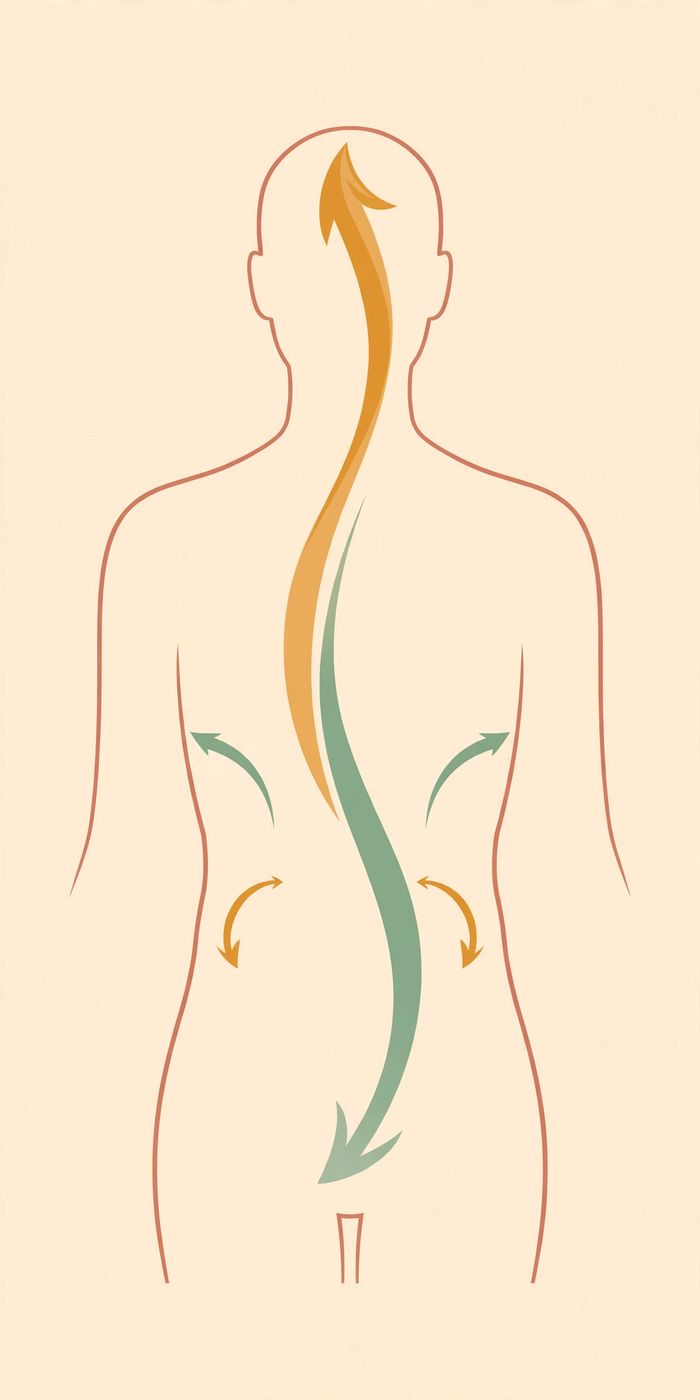
In our clinic’s framework, rising and falling are only half the picture. The full concept is 승강출입 (seung-gang-chul-ip): ascending and descending, plus entering and exiting. Qi also moves between the yin channels and the yang channels — going out (出) and coming in (入). The channels carry this movement the way a circulation system carries pressure, and smooth ascending, descending, entering, and exiting is what keeps the body balanced.
One circulation, twelve directions
Each of the twelve channels has its own direction — six descend and six ascend. Together they form one continuous circulation: the core map our pulse diagnosis works from.
Descending 降 ↓
Lung · Stomach · Heart · Bladder · Pericardium · Gallbladder
Ascending 升 ↑
Large Intestine · Spleen · Small Intestine · Kidney · Sanjiao · Liver
Our framework organizes this circulation as 體用中 — root, function, center. The Heart–Kidney axis is the root (體) of ascending and descending; the Liver–Lung pair is the function (用), the outer wheel that carries out the movement; the Spleen–Stomach pair is the center (中), the pivot. Think of it like a waterwheel — the Heart and Kidney are the axle, the Liver and Lung are the turning wheel, and the Spleen and Stomach are the hub it all balances on.
“The pulse is both the map and the compass. It shows us where the movement has gone off course — and tells us, during treatment, how it is responding.”
Dr. Joshua Pak, DACM, L.Ac.
02When Movement Goes Wrong
If health is movement in the right direction, many everyday complaints can be understood as movement gone astray. Three patterns come up again and again in the clinic — and you may recognize yourself in them.
Rising when it should descend
Too much ↑
Some qi is meant to stay anchored low. When it surges upward instead — classically in a pattern called liver yang rising — the excess arrives in the head and the mind.
It can feel like: pressure headaches, a flushed face, anxiety, ringing in the ears, irritability — or insomnia, a mind replaying the day when it should be asleep.
Sinking when it should rise
Not enough ↑
The lifting power of the middle body weakens, and qi that should be carried upward — to clear the head, support the organs, energize the limbs — drags downward instead.
It can feel like: heavy, dragging fatigue, brain fog after meals, a bearing-down sensation, dizziness when you stand, or digestion that feels like it simply drops food through.
Stuck — moving nowhere
Blocked ↔
Sometimes qi does not go the wrong way; it stops. Stress, frustration, old injuries, and long hours sitting can knot the flow, and where qi stagnates, pressure builds.
It can feel like: fixed or wandering pain, bloating that comes and goes, a tight chest with frequent sighing, a lump-in-the-throat feeling, or feeling emotionally wound up.
These are descriptions of direction, not of broken parts — which is why they can be present even when lab results come back normal. The question is how we detect them. That is the job of the pulse.
03The Pulse as a Movement Map
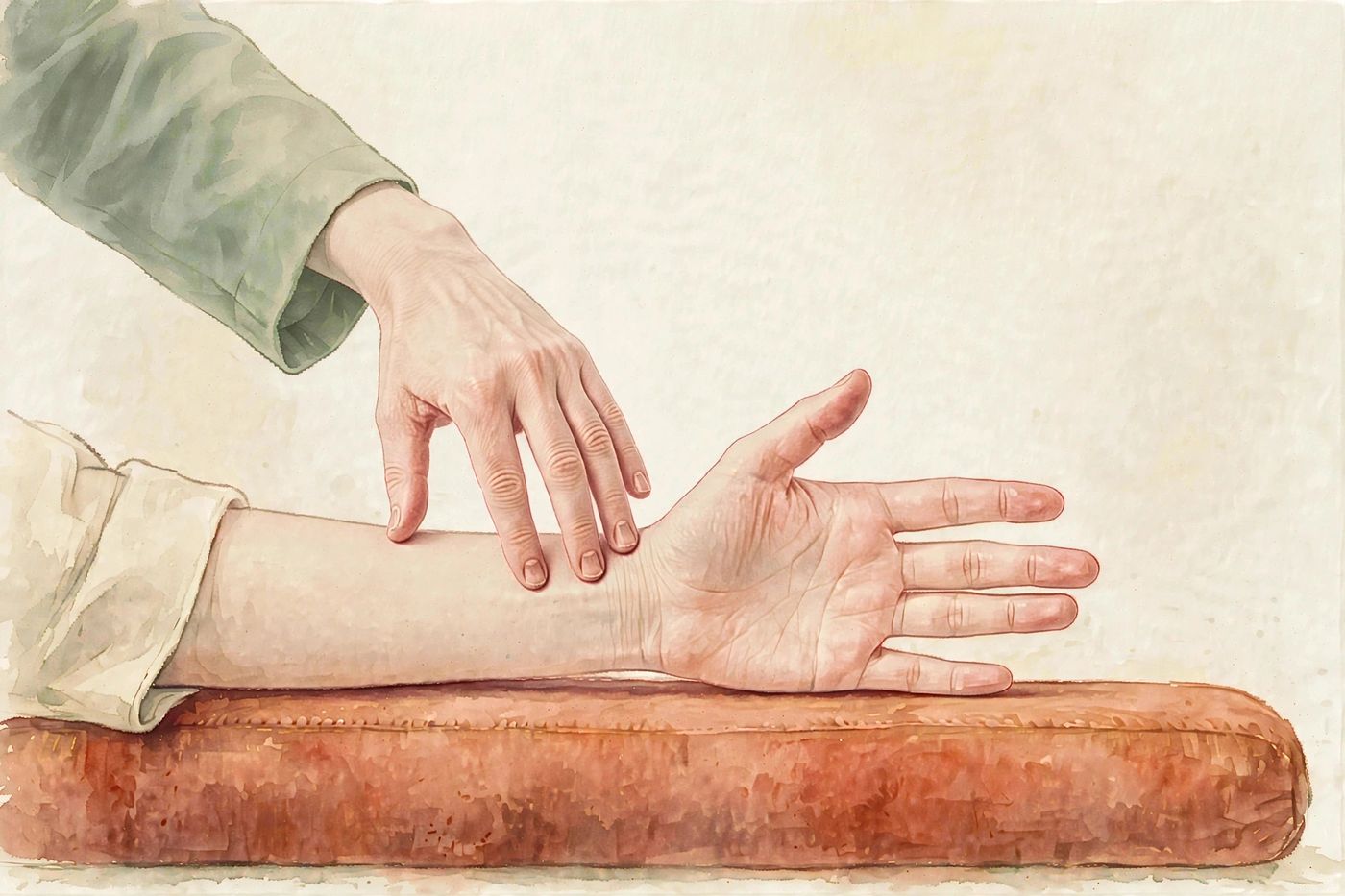
When your practitioner rests three fingers on your wrist and goes quiet for a minute, this is what they are doing: reading movement. The radial pulse at the wrist is felt at three positions — cun (寸, nearest the wrist crease), guan (關, level with the bony knob on the thumb side of the wrist), and chi (尺, just above it, toward the elbow) — and at graduated depths, from a feather-light touch to pressure near the bone. Depth alone already tells the floating-and-sinking story.
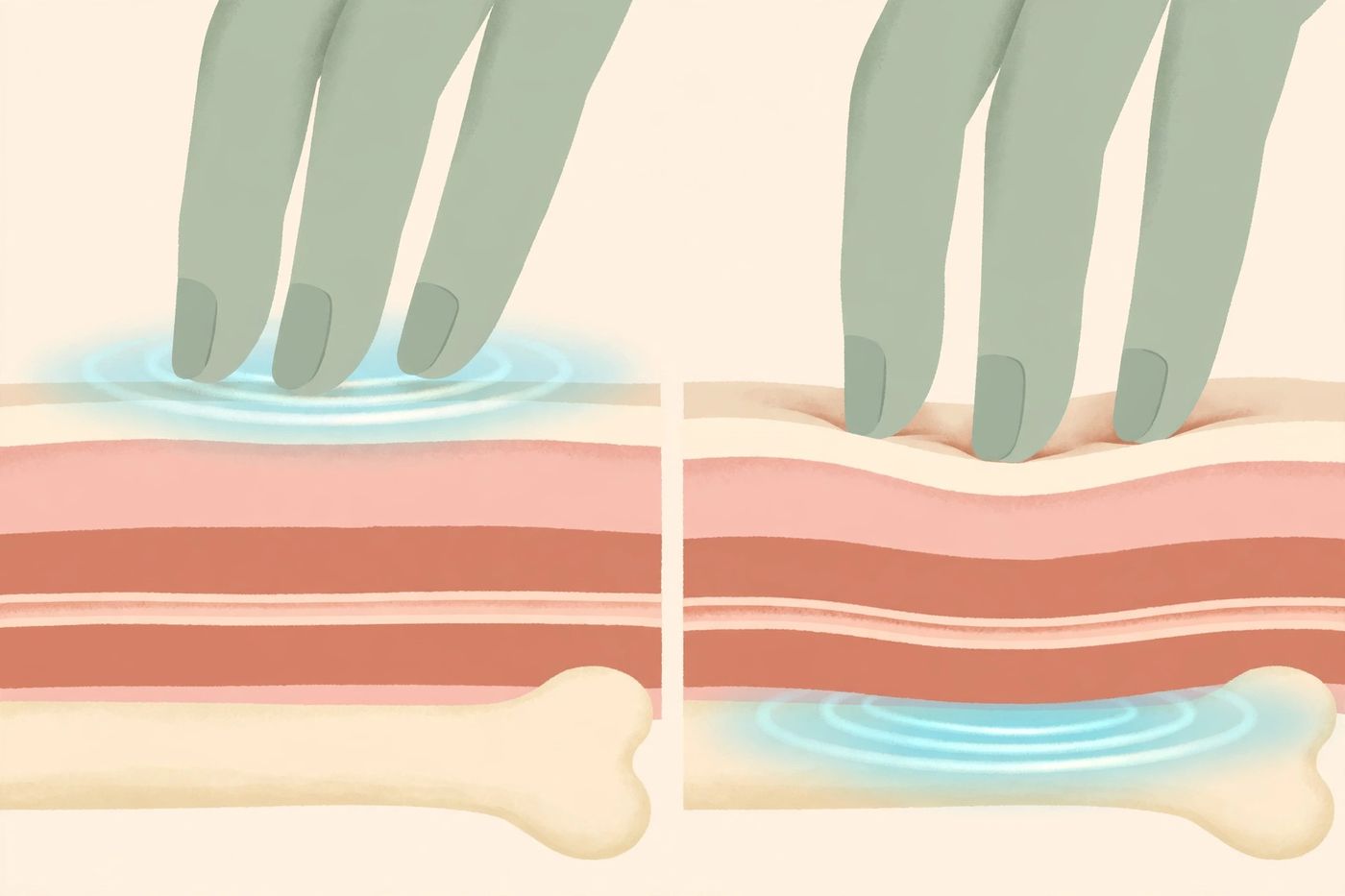
A floating pulse — one that rises up to meet the fingers with barely any pressure — suggests qi has been pushed outward and upward, toward the surface. This is the classic signature of an exterior condition: the body’s defenses are mobilized at the perimeter, as in the first day of a cold, when you feel chills and a stiff neck but are not yet truly sick inside. A sinking (deep) pulse — one you can only find by pressing down — points the other way: the dynamic is in the interior, in the organs and the deeper reserves, not at the surface.
Depth is only the first layer. Rate tells us about heat and cold; strength tells us whether the condition is one of excess or deficiency; and the pulse’s texture — slippery, wiry, thready, choppy — fills in the rest of the picture. But the most elegant part of the reading is directional. Your two wrists, read in sequence, trace the great wheel of ascending and descending itself:
Left wrist
tracing chi → cun · the ascent of yin
- Chi 尺 Kidney — the deep root
- Guan 關 Liver — qi spreading, rising
- Cun 寸 Heart — clear yang reaches the top
Following the left pulse upward, from the kidney position to the heart, traces yin ascending — stored essence rising to nourish the upper body.
Right wrist
tracing cun → chi · the descent of yang
- Cun 寸 Lung — qi dispersed from the top
- Guan 關 Spleen — the middle pivot
- Chi 尺 Lower body — qi anchored below
Following the right pulse downward, from the lung position to the lower body, traces yang descending — active qi settling and rooting, as it should.
So a skilled reading is not a snapshot; it is following a journey. We feel whether the rise on the left is smooth or forceful or failing, whether the descent on the right completes or stalls halfway. When a patient tells us, “I can’t shut my brain off at night,” and the pulse at the upper positions surges while the lower positions feel empty, the story and the symptom agree: qi is crowding upward and not descending. The reading names the direction — and direction is exactly what treatment works on.
Two pulses: the wrist and the neck
At our clinic we feel your pulse in two places — the wrist and the side of the neck. The wrist pulse, cunkou (寸口, chon-gu in Korean), is read over the radial artery; the neck pulse, renying (人迎, inyeong in Korean), is felt over the carotid artery. Comparing the two tells us about your up-down balance: if the neck pulse is stronger than the wrist pulse, yang energy is riding too high; if the wrist pulse is stronger, yin is predominant. This comparison guides how we regulate your ascending and descending with acupuncture.
04From Reading to Regulating
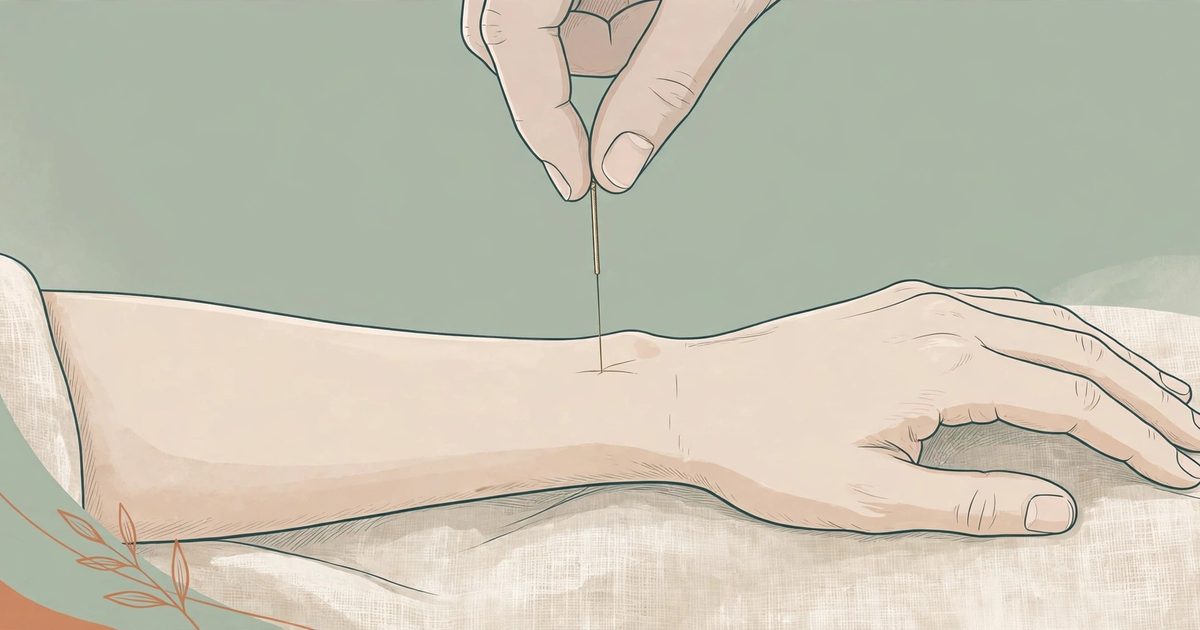
Diagnosis in this tradition is practical: once the pulse shows which movement is off, the treatment question becomes directional. Does this qi need to be guided downward, so the mind can settle? Lifted upward, so energy and clarity return? Calmed where it surges, or moved where it has knotted? Treatment is chosen to guide the movement back toward its proper course.
This is the principle behind our clinic’s approach, Pulse Regulating Acupuncture (PRA). PRA reads these movements — the twelve channel directions, the neck-and-wrist comparison, the root–function–center balance — and uses acupuncture to support smooth ascending, descending, entering, and exiting of qi. The pulse is checked before treatment to locate the disturbance, and re-checked after, in the same session, to see how it has responded: whether the surging positions have softened, the empty positions filled, the wheel turning more evenly. You are not asked to take the treatment on faith; your own pulse is part of the conversation.
If some of the patterns above sounded familiar — the racing mind at bedtime, the heavy fog after lunch, the tight, stuck feeling that stress leaves behind — that is worth a closer look. Those sensations are information, and the pulse can help show where they begin.
Have Your Pulse Read
Every first visit at JP Acupuncture & Wellness includes a full pulse assessment. Come experience what your wrist has to say — and what it feels like when the movement settles. See what to expect at your first visit.
3816 Woodruff Ave, Suite 205, Long Beach, CA 90808 · Mon–Fri 9 AM–7 PM · Insurance may cover acupuncture