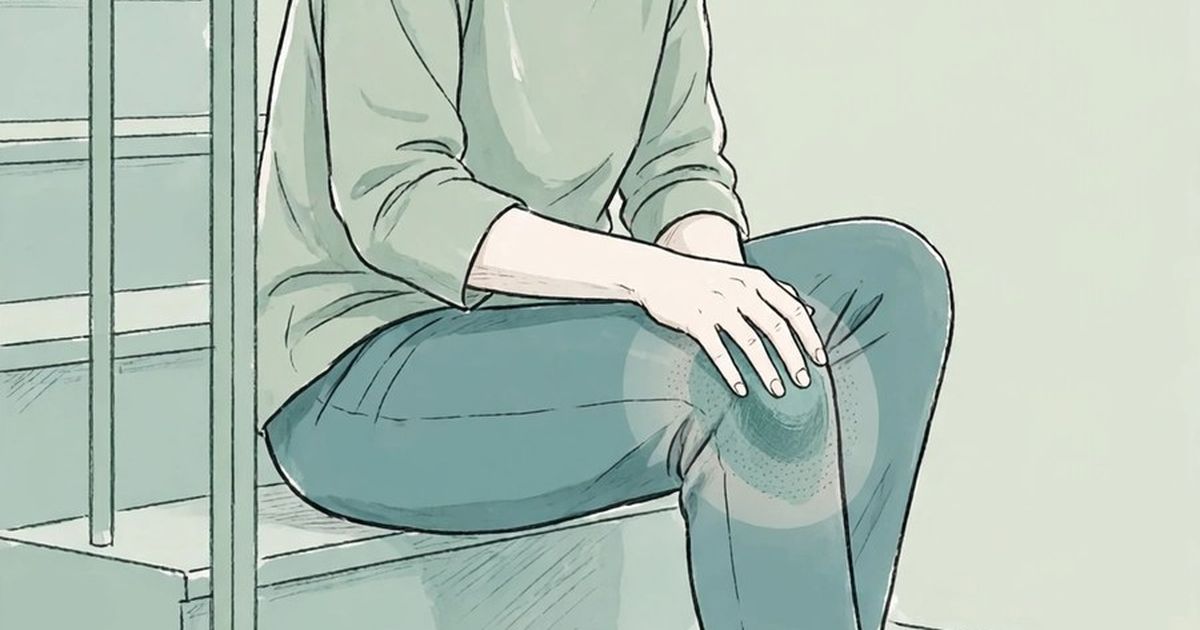

- Ankle sprains are one of the most common injuries, and many people re-sprain the same ankle — usually because balance and strength never fully came back.
- Where it hurts is a strong clue: outside of the ankle, inside of the ankle, back of the heel, or deep in the front of the joint.
- The muscles that matter most are the calf (gastrocnemius and soleus), the peroneals on the outside, and the tibialis posterior on the inside.
- Balance training and gradual strengthening have good research support for sprains and Achilles pain.
- Some signs mean you should get an X-ray or urgent care first — see the red-flag box.
01Where does it hurt? Start with the location
Your ankle is a crossroads. Bones, ligaments, and several tendons all pass through a small space, so the exact spot that hurts tells you a lot.
| Where it hurts | Common causes | Typical clues |
|---|---|---|
| Outside of the ankle | Lateral ankle sprain (ligament), peroneal tendon irritation, chronic ankle instability | Rolled the ankle in the past; feels “wobbly” on uneven ground; aches after walking on slopes or sand |
| Back of the heel / above the heel | Achilles tendinopathy | Stiff and sore with the first steps in the morning or after sitting; eases a bit once warmed up; tender cord above the heel |
| Inside of the ankle | Tibialis posterior tendon irritation, often with a flattening arch | Aching along the inside ankle bone; arch seems lower than before; tired after standing |
| Deep in the front of the joint | Ankle arthritis, old injury, bone spurs | Stiff, deep ache; less bend when squatting or going downstairs; may click or creak |
| Burning, tingling, or numbness | Nerve irritation (in the ankle, or referred from the low back) | Pins and needles, burning on the sole or top of the foot; may come with back pain |
1. The old sprain that never fully healed
A lateral ankle sprain happens when the foot rolls inward and the ligaments on the outside of the ankle are stretched or torn. Ankle sprains are among the most common musculoskeletal injuries treated in US emergency departments (Waterman et al., Journal of Bone and Joint Surgery, 2010).
The bigger problem is what comes after. An international consensus statement estimates that up to 40% of people who sprain an ankle go on to develop chronic ankle instability — repeated “giving way,” ongoing pain, and a feeling that the ankle can’t be trusted (Gribble et al., British Journal of Sports Medicine, 2016). The ligament is only part of the story. After a sprain, the ankle’s position sense and the quick reflexes of the surrounding muscles often stay weak unless they are retrained.
2. The Achilles tendon that’s overloaded
The Achilles connects your calf muscles to your heel. When it is asked to do more than it is ready for — a sudden jump in walking or running, new shoes, more stairs, or tight and weak calves — it can become painful and stiff. The classic sign is pain with the first steps in the morning that loosens up as you move.
Current physical therapy guidelines recommend progressive loading exercise — gradually strengthening the calf and tendon — as a core treatment for this kind of Achilles pain (JOSPT Clinical Practice Guideline, Midportion Achilles Tendinopathy, 2024 revision). Complete rest usually does not help the tendon get stronger.
3. Tired tendons on the inside or outside
- Peroneal tendons run behind the outside ankle bone. They work hard to keep you from rolling your ankle, so they often get irritated in people with old sprains.
- Tibialis posterior runs behind the inside ankle bone and helps hold up your arch. When it is overworked, the inside of the ankle aches and the arch may slowly flatten.
4. Joint wear and stiffness
A previous injury, years of high-impact activity, or a stiff ankle can lead to a deep ache in the front of the joint. Many people notice they can’t bend the ankle as far as the other side, especially when squatting or walking downstairs.
5. Pain that starts somewhere else
Not every ankle pain starts in the ankle. Irritated nerves from the low back can cause burning or tingling down to the foot, and gout often shows up as a sudden, red, hot, very painful joint (most often the big toe, but sometimes the ankle).
02The muscles behind most ankle pain

| Muscle | Where it is | What it does | Quick self-check at home |
|---|---|---|---|
| Calf (gastrocnemius & soleus) | Back of the lower leg, into the Achilles | Pushes you forward when you walk, climb, and rise on your toes | Calf raise count: standing on one leg (hold a counter), rise up on your toes slowly as many times as you comfortably can. Compare sides. A big difference suggests weakness on one side. |
| Peroneals (fibularis longus & brevis) | Outside of the lower leg, behind the outer ankle bone | Keep the ankle from rolling inward | Single-leg balance: stand on one foot near a counter for 30 seconds, eyes open. Compare sides. Lots of wobbling or reaching for support on one side is a clue. |
| Tibialis posterior | Deep in the calf, behind the inner ankle bone | Supports the arch and controls the foot as it lands | Arch check: stand barefoot and look at the inside of both feet. Does one arch look lower, or does that side ache after standing? |
| Tibialis anterior | Front of the shin | Lifts the front of the foot so you don’t trip | Heel walk: walk 10 steps on your heels. Note any weakness or foot slapping (if the foot can’t lift at all, see a provider promptly). |
These checks are for general awareness only — they do not diagnose anything. Stop if any check causes sharp pain.
Ankle flexibility check (knee-to-wall): Face a wall with one foot about 3–4 inches from it. Keeping the heel down, bend the knee toward the wall. If the knee touches easily on one side but not the other, that ankle is stiffer.
03How Eastern medicine looks at ankle pain
In Eastern medicine, the ankle sits where several meridian pathways pass from the leg into the foot, so it is seen as a place where flow can easily get “stuck.”
- Sinews and the Liver system: Eastern medicine describes the tendons and ligaments as “sinews,” which are nourished by the Liver system. When sinews are under-nourished — through overuse, poor sleep, or long-term strain — they are thought to become tight, weak, and slow to recover. This fits well with the modern idea that tendons and ligaments need time and gradual loading to rebuild.
- Dampness and the Spleen system: Swelling that lingers, heaviness in the legs, and ankles that feel worse in damp, cold weather are often described as “dampness” collecting in the lower body, linked to the Spleen system’s job of moving fluids.
- Qi and blood stagnation after injury: After a sprain, the bruising, swelling, and sharp, fixed pain are described as qi and blood not moving well in the area. Care focuses on restoring movement and circulation.
- Kidney system and bones: In Eastern medicine, the Kidney system is linked to bones and long-term strength. Deep, achy ankle pain that worsens with age or fatigue is often viewed through this lens.
These ideas don’t replace an orthopedic exam — they add another way to look at why one person’s ankle recovers quickly and another person’s keeps flaring up.
043 things to try today
Single-leg balance, 3 times a day
Stand next to a counter on your sore side for 30 seconds, eyes open. When that’s easy, try it on a folded towel, or turn your head slowly side to side. Balance training is one of the best-supported ways to reduce repeat ankle sprains (JOSPT Clinical Practice Guideline, Lateral Ankle Ligament Sprains, 2021 revision).
Slow calf raises
Holding a counter, rise up on both toes for a count of 3, lower for a count of 3. Start with 2 sets of 10. Mild discomfort (3 out of 10 or less) that settles by the next morning is usually okay; sharp or worsening pain means stop.
Check your shoes
Worn-down outer heels, very flat flip-flops, or shoes that twist easily in your hands give your ankle less support. Wear supportive shoes for long walks and standing days.
For a full illustrated routine in English, Spanish, and Korean, see our free Ankle Pain Home Exercises page. If your pain is mostly at the bottom of the heel, also see Plantar Fasciitis Exercises.

05Red flags — get checked before trying exercises
- The ankle or foot looks deformed, or bone is visible
- The foot is cold, pale, or blue, or you can’t feel it
- One calf suddenly becomes swollen, warm, or painful and you have chest pain or trouble breathing
- You couldn’t take 4 steps right after the injury, or still can’t put weight on it
- After an injury, the back edge or tip of either ankle bone, or the bony bump on the inner or outer edge of the midfoot, is very tender to touch (these are signs an X-ray may be needed)
- You felt a “pop” or kick at the back of the heel and now can’t push off or rise on your toes
- The joint is red, hot, and swollen, especially with fever
- One calf is swollen, warm, or tender without an injury
- You have diabetes and notice a wound, color change, or numbness in the foot
- Numbness or weakness is spreading or getting worse
06How we help at JP Acupuncture & Wellness
Every visit starts with an assessment: where the pain is, how you injured it (or didn’t), how you walk and balance, and what your calf, peroneal, and arch muscles are doing. From there we build a plan that fits your case. That may include acupuncture, gentle soft-tissue work, cupping, and a home exercise plan that progresses balance and strength over time. When it fits your case, we also use Pulse Regulating Acupuncture (PRA), our pulse-based, individualized approach.
If your ankle needs imaging or a referral first, we’ll tell you — and we’re happy to work alongside your physician, podiatrist, or physical therapist.
Ready to get back on solid footing?
If ankle pain is changing how you walk, stand, or exercise, we’re here to help. Book an appointment or call the clinic. JP Acupuncture & Wellness — Joshua Pak, DACM, L.Ac. — 3816 Woodruff Ave, Ste 205, Long Beach, CA.
New here? Start with your first visit and our online intake form. Most insurance plans accepted — how insurance works here.
3816 Woodruff Ave, Suite 205, Long Beach, CA 90808 · Mon–Fri 9 AM–7 PM