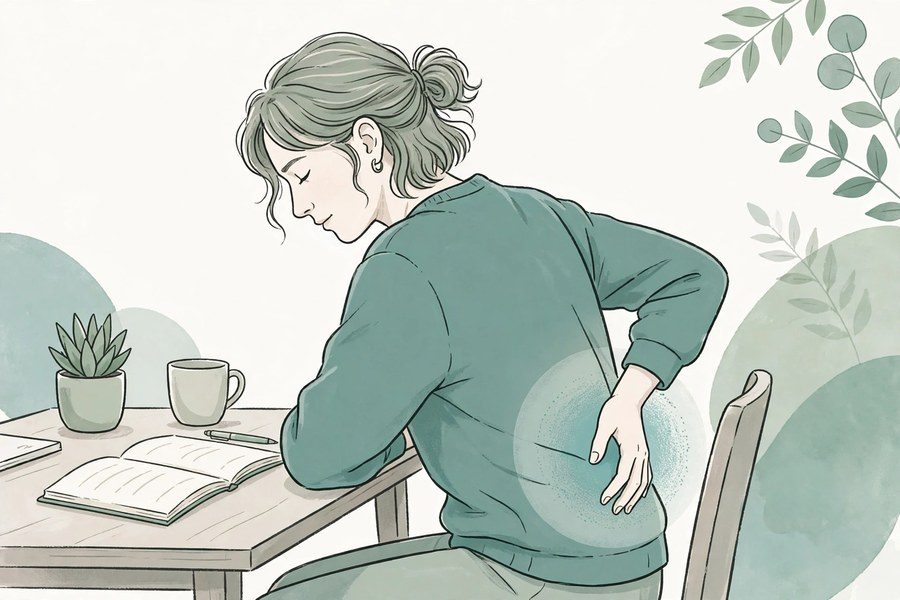
About four in five adults deal with low back pain at some point. The good news: most of it is not serious, and most of it gets better. The less good news: it often comes back — usually because the reason behind it never changed.
This guide is about that reason. What tends to cause low back pain, which muscles are usually involved, how Eastern medicine explains it, and three simple things you can try today.
- Most low back pain comes from muscles and joints that are overloaded, stiff, or under-used — not from something dangerous.
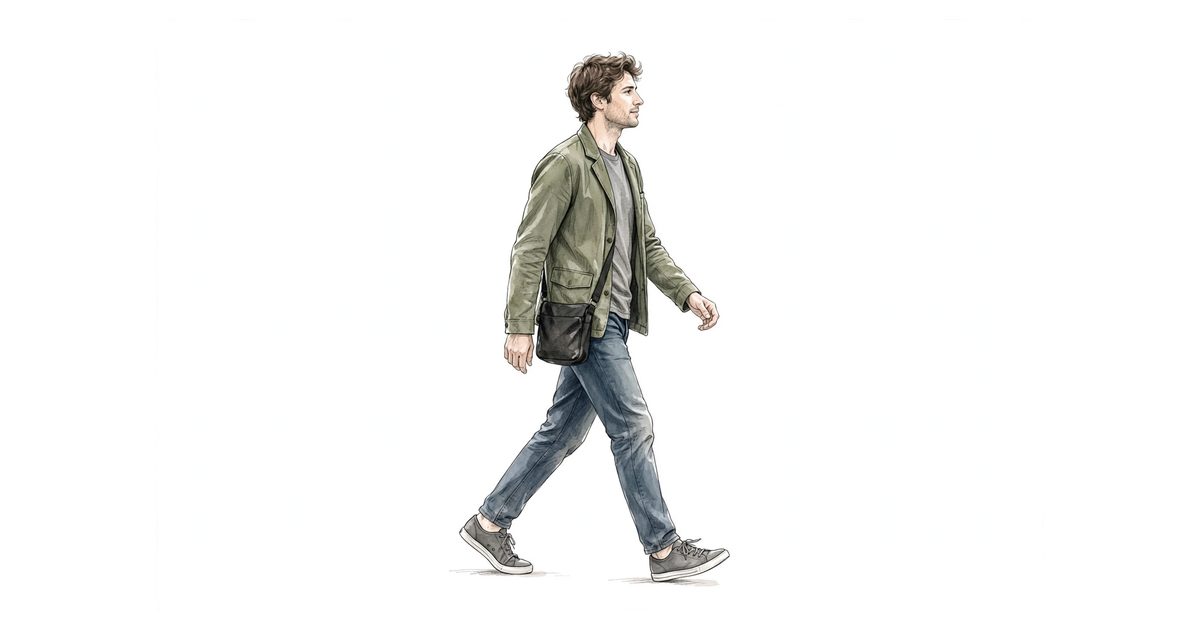
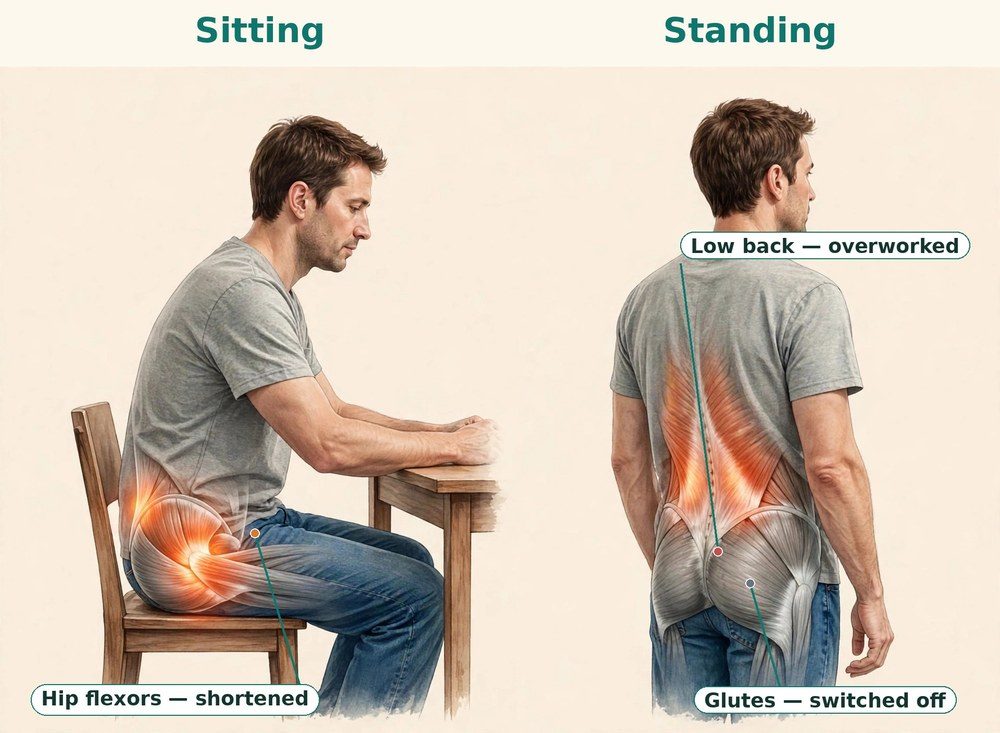
- Long sitting and long standing are two of the biggest triggers. Sitting tightens the hip flexors and quiets the glutes; standing — especially with the pelvis tipped forward — keeps the lower back arched and working.
- Four muscles show up again and again: the quadratus lumborum, the back extensors, the hip flexors, and the gluteus medius.
- In Eastern medicine, the lower back is called “the house of the Kidney” — and cold, damp, and stagnation all play a part.
- Numbness in the saddle area, bladder or bowel changes, or leg weakness that is getting worse need medical care right away.
01The common causes
| Cause | What it often feels like | Common triggers |
|---|---|---|
| Muscle strain or overload | Ache or spasm on one or both sides; tight, guarded back | Lifting, yard work, a sudden twist, a new workout |
| Long sitting | Stiff and achy when you stand up; better once you move | Desk work, long drives, the couch |
| Long standing / pelvis tipped forward | Achy after 30–45 minutes on your feet; better when you sit or lean forward | Kitchen, retail, salon, or classroom work; standing desks |
| Stiff spinal joints | Ache that is worse standing still or leaning back; often stiff in the morning | Standing for long periods, getting older |
| Disc irritation | Worse sitting, bending forward, or coughing; may travel down one leg | Repeated bending and lifting, long sitting |
| SI joint | One-sided, near the dimple above the buttock | Stairs, standing on one leg, rolling over in bed |
More than one can be in play at the same time. If you want help telling the back, the SI joint, and true sciatica apart, see Back, SI Joint, or Buttock?
02Why sitting is so hard on your back
When you sit for hours, two things happen. The hip flexors at the front of the hip stay shortened, and the glutes — the big muscles that should power you out of a chair and steady your pelvis — go quiet. When you stand up, the tight hip flexors tug the lower spine forward, and the lower back muscles take over work the glutes should be doing. Do that every day, and the back gets tired, tight, and sore.
That is why “just stretch your back” often doesn’t fix it. The lower back is usually the muscle complaining, not the muscle causing the problem.
03Why standing all day can hurt, too
Standing sounds easier on the back than sitting, but many people feel it most after 30–45 minutes on their feet — at a counter, in a kitchen, in a classroom, or at a standing desk. In lab studies, a large share of people with no back pain (about 4 in 10 in one study, 7 in 10 in another) developed low back discomfort during one to two hours of standing.
Two things tended to show up in the people who hurt:
- The lower back stayed arched. People who developed pain stood with more curve in the lower back — and the more curve, the more pain. That keeps the small joints at the back of the spine loaded and the back muscles working the whole time.
- The hip muscles got tired. The gluteus medius muscles on both sides fired together instead of taking turns, and side-core endurance was lower. The muscles that hold the pelvis steady simply wore out.
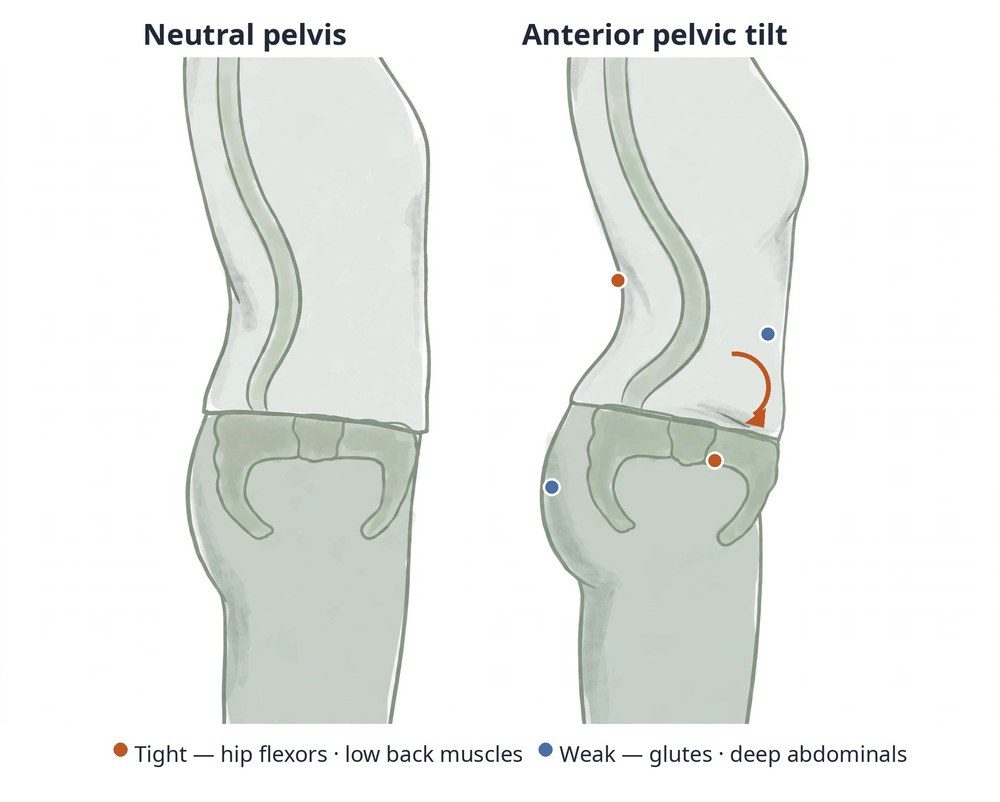
Anterior pelvic tilt: when the pelvis tips forward
Picture the pelvis as a bowl. In anterior pelvic tilt, the front of the bowl tips down, the backside sticks out a little, and the lower back arches more. A common muscle pattern sits behind it:
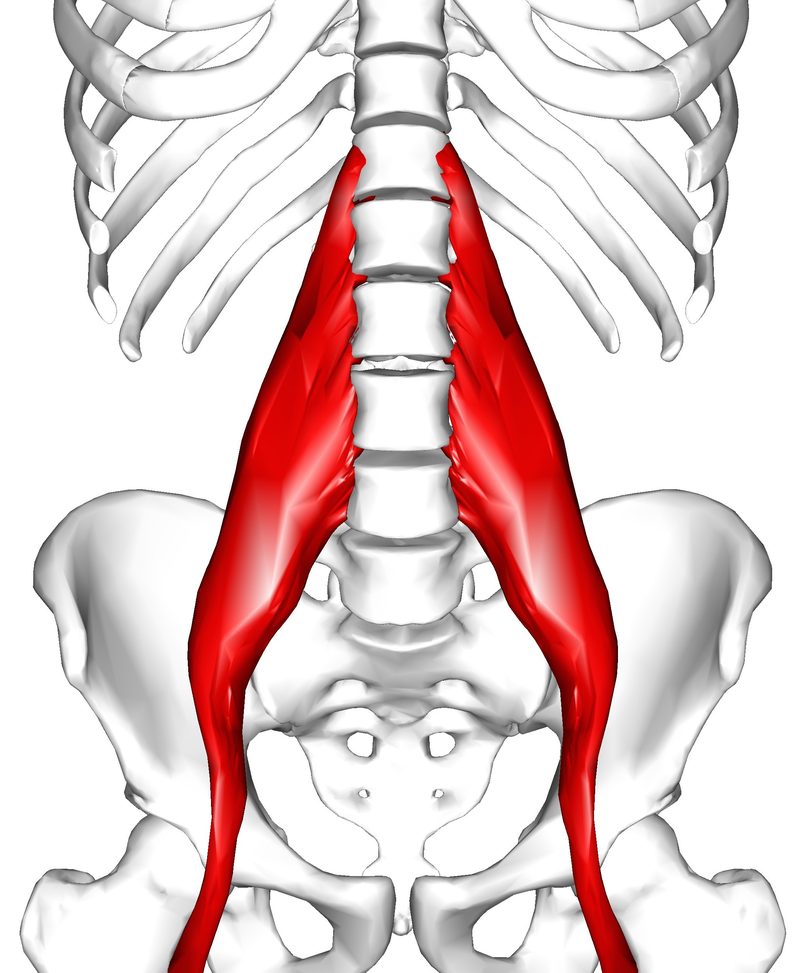
- Tight: the hip flexors (iliopsoas and the rectus femoris at the front of the thigh) and the low back muscles (erector spinae, QL)
- Weak or under-used: the glutes and the deep abdominal muscles
Long sitting feeds this pattern, too. The hip flexors stay short all day, then pull the pelvis forward when you stand up.
A forward tilt is common and is not a diagnosis on its own. Many people with it have no pain, and research on posture and back pain is mixed — people with long-term back pain, especially from a disc, more often have less curve, not more. But if your back aches mainly when you stand or walk, and eases when you sit or lean forward, a tipped pelvis and tired hip muscles are worth checking.
Self-check: Stand with your heels, buttocks, and shoulders against a wall. Slide one hand into the gap behind your lower back. A flat hand that just fits is typical. If the gap is deep enough for a fist, your pelvis may be tipping forward. In that case, strengthening the glutes and abs and stretching the front of the hips usually helps more than stretching the back.
04When a disc is involved
Between each pair of vertebrae sits a disc — a tough outer ring with a gel-like center. When a disc is irritated, the pain often:
- gets worse with sitting, bending forward, lifting, or coughing and sneezing
- feels better when you stand up, walk, or lie down
- may travel into the buttock or down one leg — pain, tingling, or numbness below the knee usually means a nerve is involved
Notice that this is close to the opposite of the standing pattern above. That contrast is one of the first clues we look for. Disc changes are also very common on MRI in people with no pain at all, and most disc-related back pain improves over weeks to months with movement and conservative care. Leg weakness that is getting worse, or numbness in the saddle area, is different — see When to get care first below.
We’ll cover discs — bulges, herniations, and what tends to help — in a separate post.
05The muscles behind it — and how to check them at home
1. Quadratus lumborum (QL) — a deep muscle between the lowest rib and the top of the hip bone. It often causes a one-sided ache just above the hip, worse when you stand up, roll over, or cough.
Self-check: Stand and place your thumb just above the back of your hip bone, about a hand’s width out from the spine. Press gently. A familiar, deep ache there points to the QL.
2. Back extensors (erector spinae) — the long muscles on both sides of the spine. They tighten up to guard the back and feel like two firm ropes.
Self-check: Lie on your stomach and gently press along both sides of the spine. Tight, tender bands that ease with warmth are common.
3. Hip flexors (iliopsoas) — deep muscles at the front of the hip that attach to the lower spine. When tight, they cause a central low back ache that is worse when you stand up straight after sitting.
Self-check: Lie on your back at the edge of a bed. Hug one knee to your chest and let the other leg hang. If the hanging thigh lifts off the bed, that hip flexor is tight.
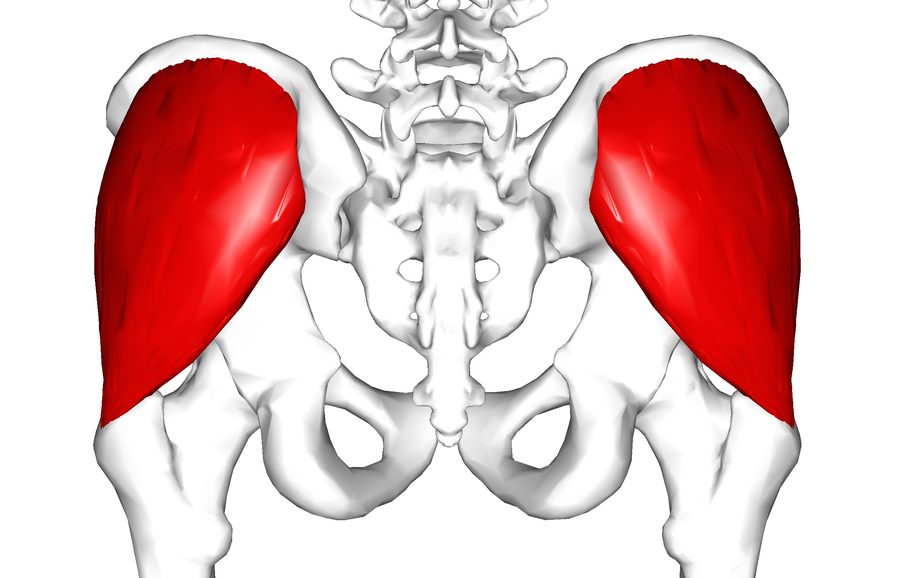
4. Gluteus medius — on the side of the hip. When weak, the pelvis drops and the lower back and SI area take the strain.
Self-check: Stand on one leg for 30 seconds in front of a mirror. If the opposite hip drops, or you have to lean to the side to balance, the gluteus medius needs work.
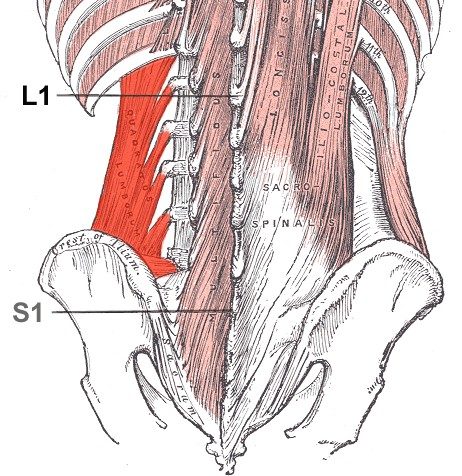
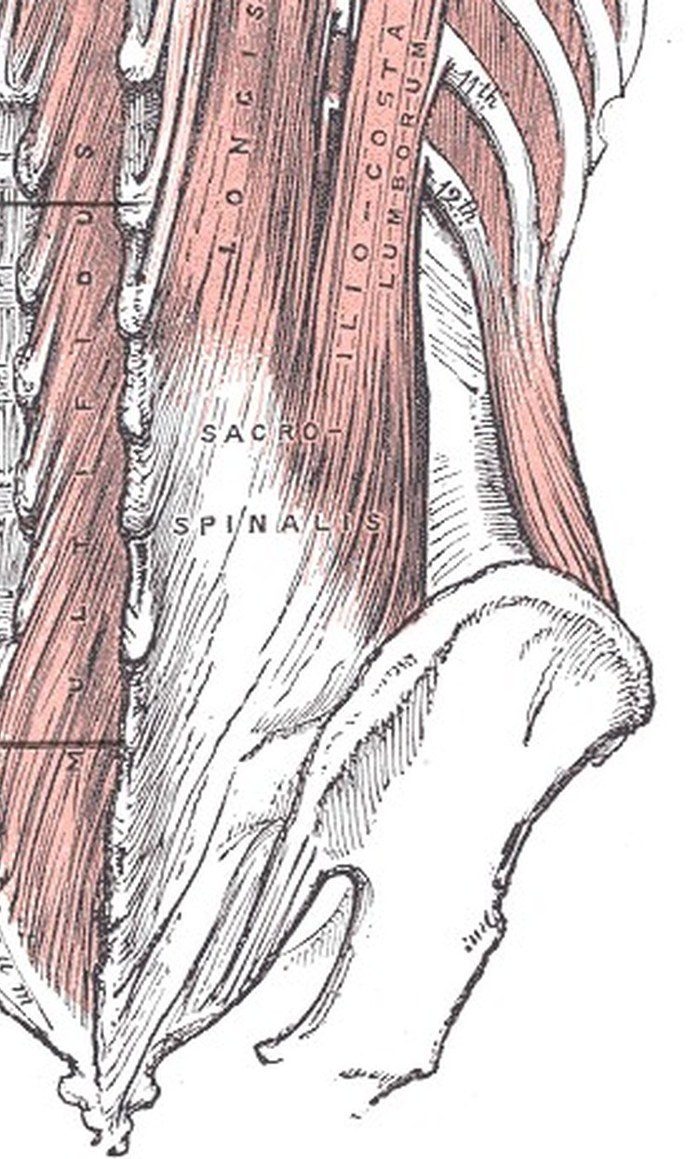
These self-checks are clues, not a diagnosis. Stop if any of them causes sharp pain.
06The Eastern medicine view
Eastern medicine has described low back pain for more than two thousand years. A classic line from the Huangdi Neijing says: “The lower back is the house of the Kidney” (腰爲腎之府). In Eastern medicine the Kidney is not just the organ — it stands for the body’s deep reserves of strength and warmth. When those reserves run low, the lower back is often the first place you feel it.
We usually see three patterns, alone or together:
| Pattern | What it often feels like | What tends to make it worse |
|---|---|---|
| Cold and damp | Heavy, stiff, achy; feels better with heat | Cold weather, damp days, sitting on cold floors |
| Stagnation | Sharp or fixed in one spot; hurts to press | An old injury, long sitting, staying still |
| Depletion | Dull, tired ache; weak knees; better lying down | Overwork, poor sleep, getting older |
Knowing which pattern fits helps decide whether care should warm, move, or strengthen — and it explains why a heating pad helps one person and does little for another.
073 things to try today
Change position often
If you sit, stand up and walk for 2–3 minutes every 30–45 minutes. If you stand, shift your weight, rest one foot on a low step (about 8 inches) and switch sides, or sit down for a few minutes. Set a timer. This one habit often does more than any stretch.
Wake up your glutes
Do 10 slow glute bridges: lie on your back, knees bent, squeeze your buttocks, and lift your hips. If we’ve given you a home exercise sheet, start with its first moves.
Warm it up
If your back feels stiff and better with heat, use a heating pad or warm shower for 15–20 minutes. Skip heat on a fresh injury that is swollen or hot.
08When to get care first
- Numbness in the “saddle” area (inner thighs, buttocks, genitals)
- New trouble controlling your bladder or bowels
- Leg or foot weakness that is getting worse, or foot drop
- Back pain with fever, or after a fall or accident
See a physician soon if you have back pain with a history of cancer, unexplained weight loss, new back pain after age 50, or pain that wakes you at night and doesn’t ease with rest or changing position.
09How Eastern Medicine Can Help
At JP Acupuncture, care starts with a hands-on assessment — where it hurts, how you move, how your hips and pelvis are working, and your overall health. From there, we choose the tools that fit: acupuncture, electro-acupuncture, cupping, moxibustion for a cold pattern, tui na (hands-on bodywork), and a home exercise plan. When it fits your case, we also use Pulse Regulating Acupuncture (PRA), our signature approach: we read the pulse, place needles, re-check how the pulse responds, and adjust in the same visit.
Acupuncture works alongside — not instead of — care from your physician. The American College of Physicians’ guideline lists acupuncture among non-drug options for chronic low back pain, and research suggests it may help reduce pain and improve function, though results vary from person to person.
The bottom line
Your lower back usually hurts for a reason you can change: too much sitting or standing, a pelvis that tips forward, tight hips, quiet glutes, or an overloaded muscle. Check the four muscles, try the three steps for a week, and notice what shifts. If it keeps coming back — or any warning sign appears — get it looked at.
Low back pain that keeps coming back?
Book a visit at our Long Beach clinic. We’ll check your back, hips, and pelvis and give you an honest plan. Injured at work or in a car accident? We also work with workers’ comp and auto injury claims.
New here? Start with your first visit and our online intake form. Most insurance plans accepted — how insurance works here.
3816 Woodruff Ave, Suite 205, Long Beach, CA 90808 · Mon–Fri 9 AM–7 PM