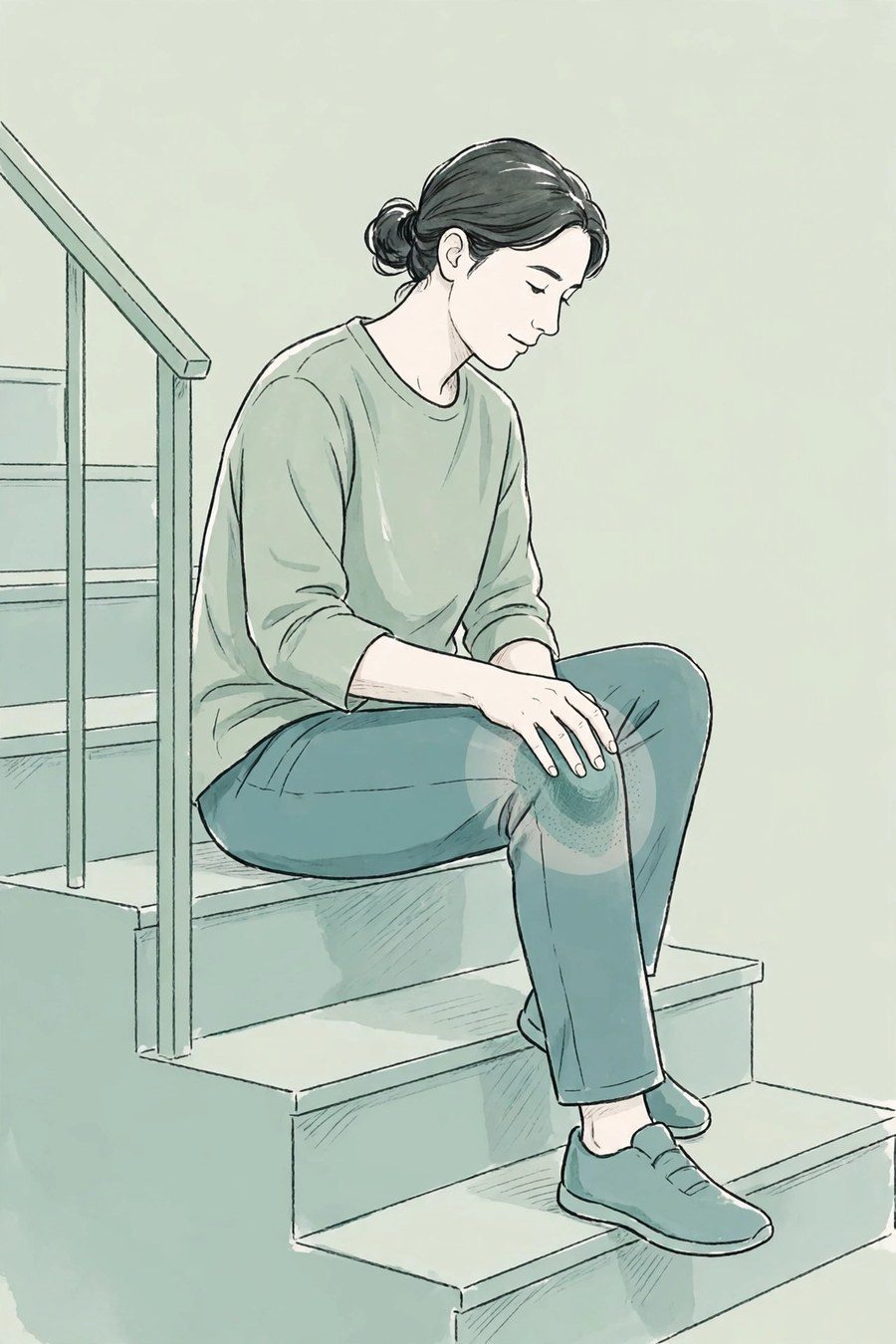
The knee is a simple hinge stuck between two complicated joints: the hip above and the ankle below. When either one isn’t doing its job — a weak hip, a stiff ankle, flat feet — the knee takes the extra load. That is why so much knee pain starts somewhere else.
This guide walks through where knee pain usually comes from, the muscles behind it, how Eastern medicine explains it, and three things you can try today.
- Where it hurts is your first clue: front, inside, outside, or behind the knee each point to different causes.
- Weak hip muscles let the knee cave inward, and tight thighs and calves pull on the kneecap — the knee often hurts because of its neighbors.
- Wear-and-tear arthritis is common after 50, but stiffness that eases with movement is a sign the knee still wants to move.
- In Eastern medicine, the knee is called “the house of the sinews” — cold, damp, and weakness of the tendons all show up here.
- A knee that suddenly swells, locks, gives way, or can’t take weight — or calf pain and swelling — needs medical care first.
01Where it hurts — and what that usually means
| Where | Often points to | Typical clues |
|---|---|---|
| Front, around or behind the kneecap | Kneecap tracking (patellofemoral pain) | Worse going down stairs, squatting, or after sitting with knees bent (“moviegoer’s knee”) |
| Inside of the knee | Inner-knee wear (arthritis), inner tendons (pes anserine), inner ligament or meniscus | Ache with walking or rising from a chair; tender just below the inner joint line |
| Outside of the knee | IT band, outer tendons | Burning or rubbing on the outer knee with running, cycling, or long walks |
| Back of the knee | Hamstring or calf tendons, a fluid-filled cyst (Baker’s cyst) | Tightness when straightening fully; fullness behind the knee |
| All over, stiff in the morning | Wear-and-tear arthritis | Stiff for under 30 minutes after waking, eases with movement, creaks or grinds |
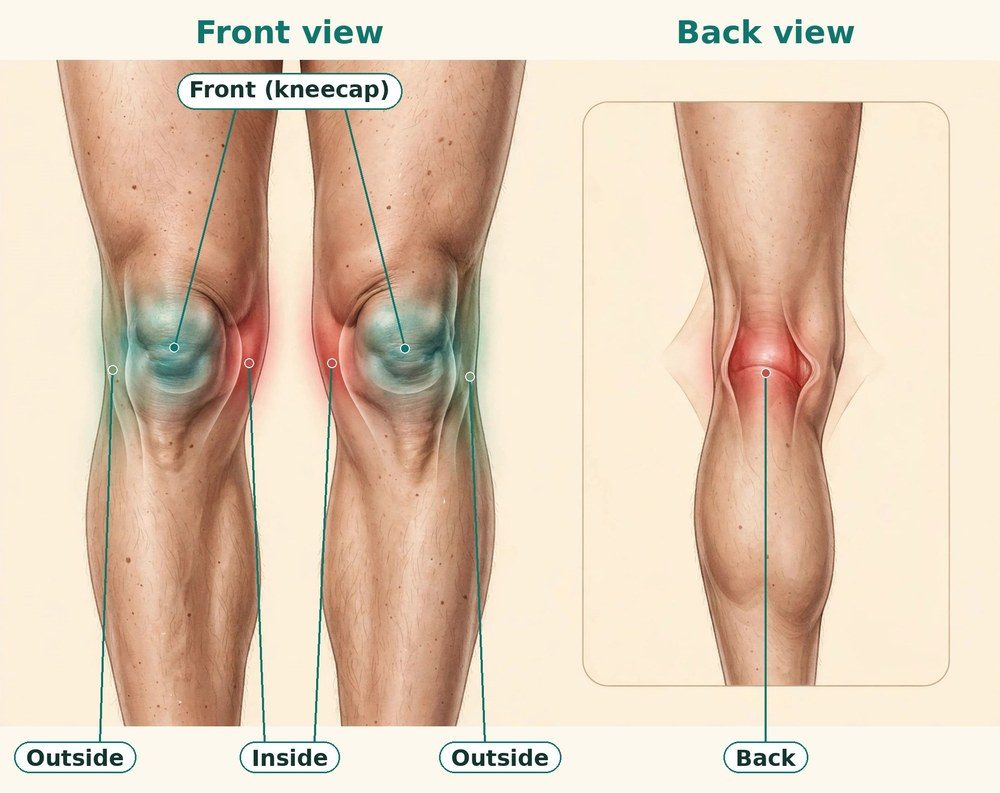
This table is a guide, not a diagnosis. Knee pain after a twist, a fall, or a pop needs an exam.
02The muscles behind it — and how to check them at home
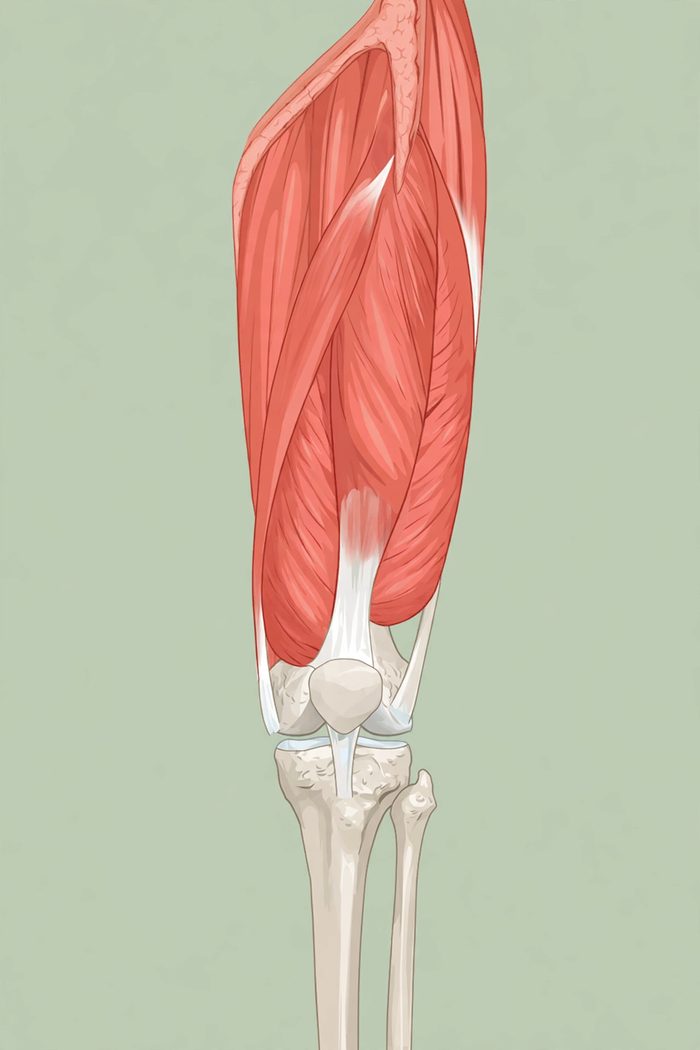
1. Quadriceps — the front of the thigh, which steers the kneecap. When tight or weak (especially the inner part just above the knee), the kneecap tracks poorly and the front of the knee aches.
Self-check: Sit with your leg straight and tighten your thigh. Put a finger on the inner muscle just above the kneecap. If it feels soft or slow to tighten compared with the other side, it needs strengthening.
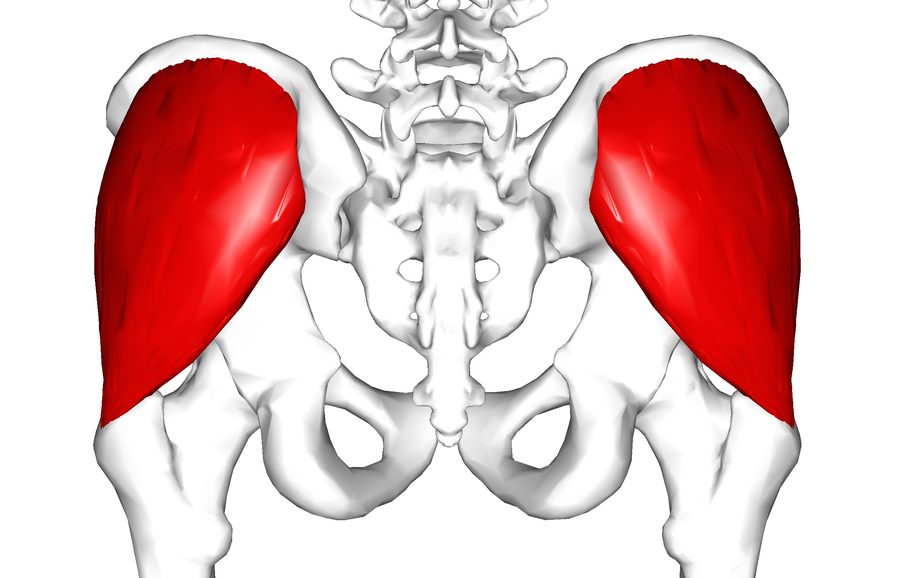
2. Gluteus medius — on the side of the hip. When weak, the thigh rolls in and the knee caves inward with every step and stair.
Self-check: Stand in front of a mirror and do a slow, shallow single-leg squat. If your knee drifts inward past your big toe, your hip isn’t holding the knee in line.
3. Hamstrings and calves — the back of the thigh and lower leg. When tight, they keep the knee from straightening fully and add pressure on the joint.
Self-check: Sit on the floor with legs straight. If the back of the knee can’t rest flat, or you feel a strong pull behind the knee, they are tight.
4. Inner-knee tendons (pes anserine) — three tendons that meet just below the inner knee. They get sore with stairs, rising from a chair, and in people with knee arthritis.
Self-check: Press about two finger-widths below the inner joint line, slightly toward the front. A sharp, specific tenderness there is a common clue.
Stop any self-check that causes sharp pain.
03The Eastern medicine view
The Huangdi Neijing calls the knee “the house of the sinews” (膝爲筋之府). In Eastern medicine, the sinews — tendons and ligaments — are nourished by the Liver, and the bones by the Kidney. When those systems are well supplied, the knee is strong and supple. When they run low, or when cold and damp settle in, the knee becomes stiff, weak, or swollen.
| Pattern | What it often feels like | What tends to make it worse |
|---|---|---|
| Cold and damp | Stiff, heavy, achy; better with warmth | Cold or rainy weather, air conditioning on bare knees |
| Damp-heat | Warm, puffy, sore knee | Overuse after a flare, rich food and alcohol |
| Weak sinews and bones | Tired, wobbly knees; weak when climbing stairs; often with low back ache | Age, overwork, long standing |
This is why we look at the whole body — and why a knee that aches every winter may need warming care more than rest.
043 things to try today
Sit-to-stand, slowly
Stand up from a chair without using your hands, then sit back down slowly — 10 times, with knees pointing over your toes. This builds the thigh and hip muscles that protect the knee.
Watch your knee line
On stairs and when you squat, keep your knee pointing over your second toe, not caving inward. Take stairs one at a time with a rail if needed for now.
Heat for stiff, ice for swollen
Warmth for 15–20 minutes eases a stiff, achy knee. If it is swollen or warm after activity, use a cold pack wrapped in a towel for 10–15 minutes instead.
Coming up in this series: why knees hurt on stairs, and why they ache more in cold weather.
05When to get care first
- Calf pain, swelling, warmth, or redness in one leg — especially after travel or surgery (a possible blood clot)
- A knee that is hot, red, and swollen, with fever
- A knee you can’t put weight on after a fall or twist
- A knee that suddenly swells after a pop, locks and won’t straighten, or keeps giving way
See a physician soon if pain wakes you at night week after week, or your knee keeps getting weaker or more swollen despite rest.
06How Eastern Medicine Can Help
At JP Acupuncture, care starts with a hands-on assessment — where the knee hurts, how it moves, and how your hips, ankles, and feet are working, along with your overall health. From there, we choose the tools that fit: acupuncture, electro-acupuncture, moxibustion for a cold knee, cupping for tight thighs, tui na, and a step-by-step strengthening plan. When it fits your case, we also use Pulse Regulating Acupuncture (PRA), our signature approach: we read the pulse, place needles, re-check how the pulse responds, and adjust in the same visit.
Acupuncture works alongside — not instead of — care from your physician. The American College of Rheumatology guideline lists acupuncture among options for knee osteoarthritis, and research suggests it may help reduce knee arthritis pain and improve function for some people, though results vary from person to person.
The bottom line
Start with where it hurts, then look up and down the leg. A weak hip, a tight thigh, or a stiff ankle is often the real reason your knee complains. Try the three steps for a week — and if the knee keeps aching, swelling, or giving way, get it checked.
Knee pain slowing you down?
Book a visit at our Long Beach clinic. We’ll check your knee, hips, and ankles and give you an honest plan. Injured at work or in a car accident? We also work with workers’ comp and auto injury claims.
New here? Start with your first visit and our online intake form. Most insurance plans accepted — how insurance works here.
3816 Woodruff Ave, Suite 205, Long Beach, CA 90808 · Mon–Fri 9 AM–7 PM