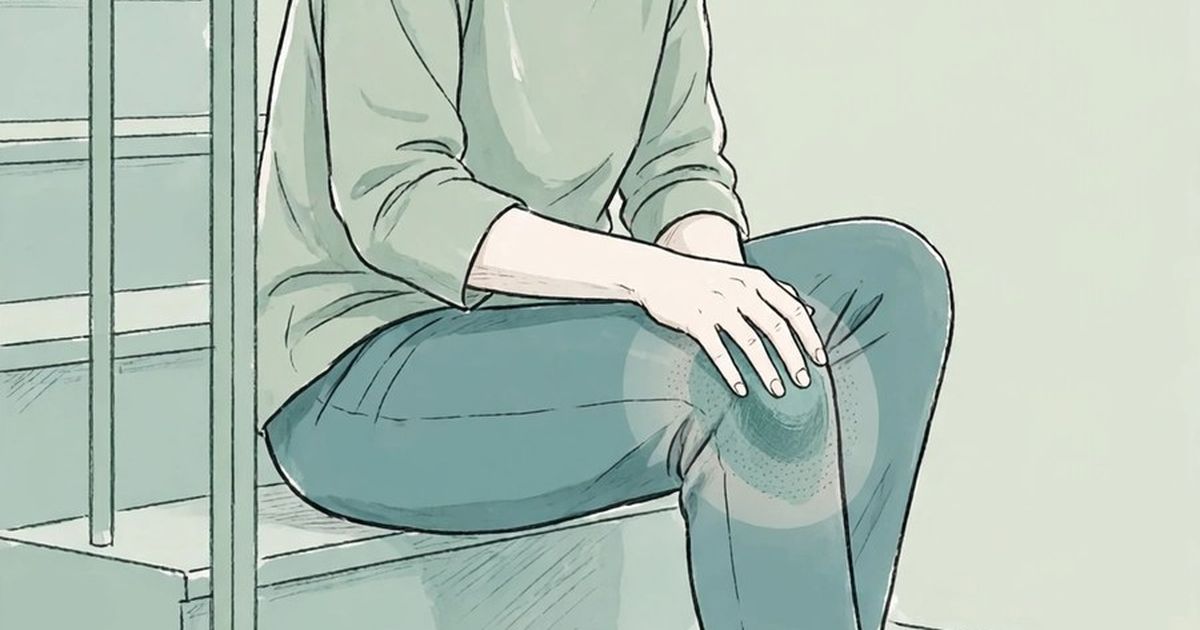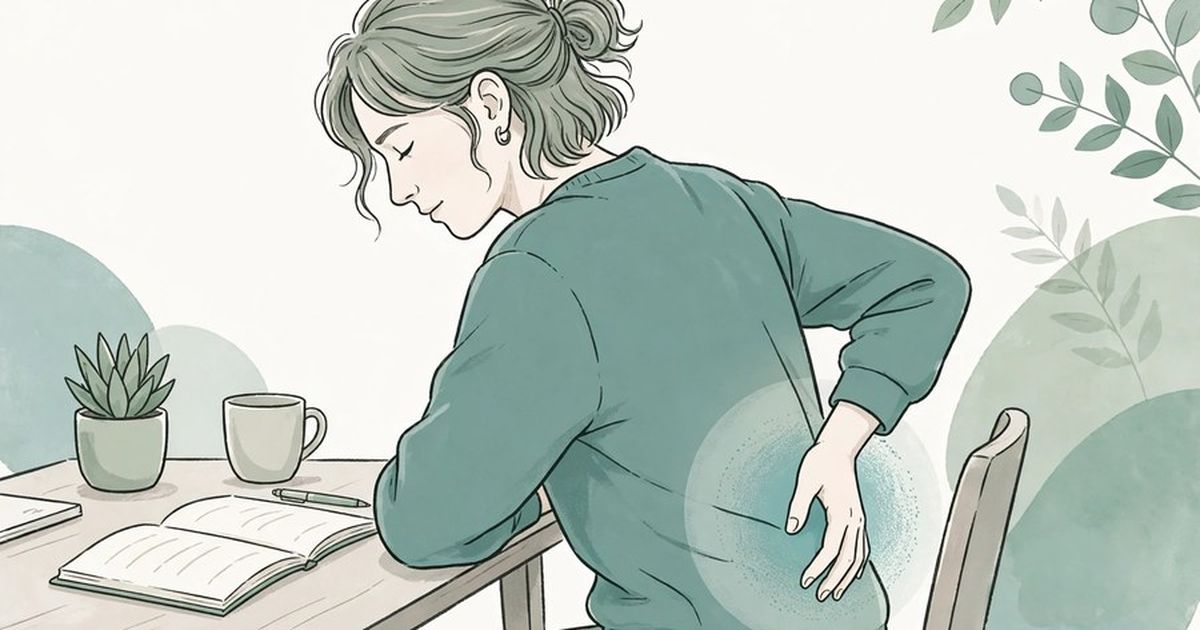

- Most low back pain is “nonspecific” — no single damaged structure — and the muscles around the spine and hips are often a big part of it.
- The gluteus medius (side of the buttock) tends to be weaker and more tender in people with low back pain.
- The quadratus lumborum (QL) can cause one-sided aching at the waist, especially after standing, carrying, or leaning.
- Tight, overworked hip flexors from long sitting can pull on the low back.
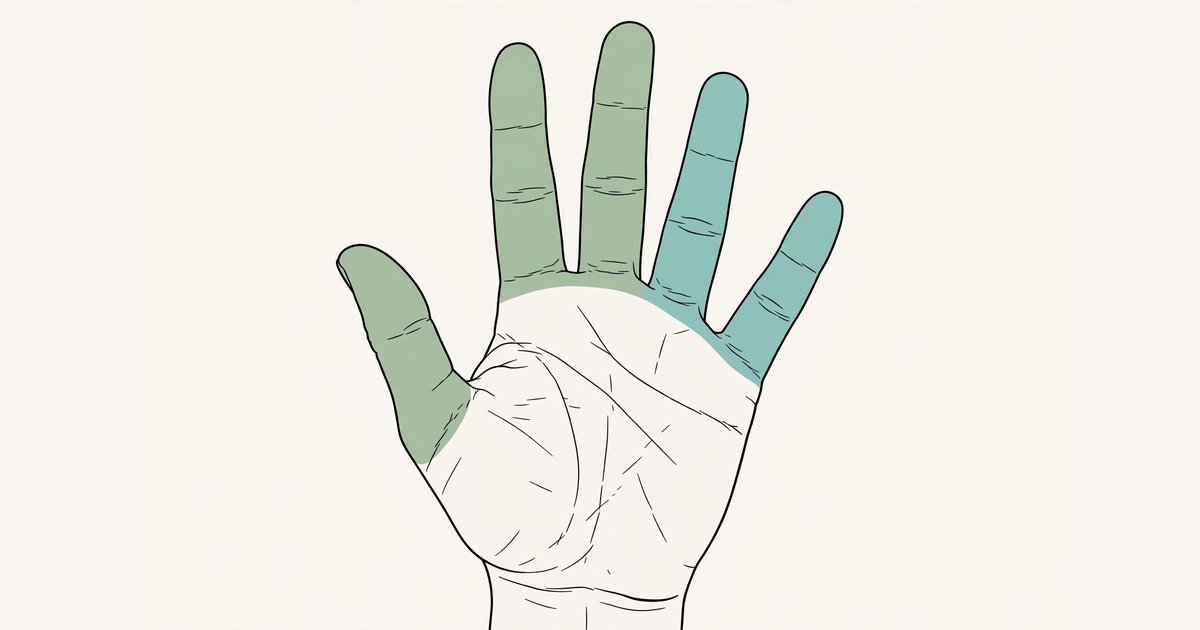
- Buttock pain that shoots down the leg is not always sciatica — but some signs need prompt care.
Start here if you haven’t read it yet: Why Does My Lower Back Hurt?
01Why look at the muscles?
Doctors call most low back pain “nonspecific,” which simply means there isn’t one clear damaged structure on an exam or scan. That doesn’t mean nothing is going on. Muscles that are weak, overworked, or guarding can keep the back sore and stiff — and they are one of the things you can actually change at home.

02Meet the muscles
| Muscle | Where it is | What it does | How it can feel when it’s involved |
|---|---|---|---|
| Gluteus medius | Upper outer buttock, just below the top of the pelvis | Keeps your pelvis level when you stand on one leg and walk | Ache at the side of the buttock or low back; tired hips when walking; one hip “drops” |
| Gluteus maximus | The large muscle of the buttock | Powers standing up, climbing stairs, and lifting | Sore buttock; back takes over when lifting or standing up |
| Piriformis & deep hip rotators | Deep in the buttock, under the glutes | Turns the hip out and steadies it | Deep buttock pain, worse sitting; can sometimes cause tingling down the back of the thigh |
| Quadratus lumborum (QL) | Side of the low back, between the lowest rib and the top of the pelvis | Side-bends the trunk and steadies the spine and pelvis | One-sided waist ache; hard to roll over in bed or stand up straight; worse after carrying a bag on one side |
| Hip flexors (iliopsoas) | Front of the hip, connecting the lower spine to the thigh | Lifts the thigh; works all day when you sit | Low back ache when standing up after sitting; hard to stand fully upright; tight front of hip |
03The glutes: the “hidden” back muscles
A systematic review found that people with low back pain tended to have a weaker gluteus medius and more trigger points (tender knots) in that muscle than people without back pain (Sadler et al., BMC Musculoskeletal Disorders, 2019). When the glutes don’t do their share, the low back often picks up the extra work.
Self-check — single-leg stand: Stand facing a mirror and lift one foot a few inches. Watch your pelvis. Does the hip on the lifted side drop, or does your trunk lean over the standing leg? Try the other side. A clear difference suggests the standing-side gluteus medius is weaker.
Self-check — side-lying leg lift: Lie on your side with the bottom knee bent. Lift the top leg slightly behind you, toes pointing forward, and hold for 10 seconds. Compare sides. Early fatigue or cramping on one side is a clue.
04“Is it sciatica, or is it my buttock?”
People often use “sciatica” for any pain in the buttock or down the leg. True sciatica usually means a nerve root in the low back is irritated, and it often comes with pain below the knee, numbness, or tingling in the foot. But tight, irritated muscles deep in the buttock (like the piriformis) can also cause deep buttock pain and sometimes tingling down the back of the thigh — often worse after sitting.
The difference matters, because the right plan is different. If you have leg weakness, numbness that is spreading, or any of the signs in the red-flag box below, get checked first. For more on telling apart back, SI joint, and buttock pain, see Back, SI Joint, or Buttock Pain?
05The QL: the one-sided waist ache
The QL sits deep at the side of your low back. It works hard when you carry groceries in one hand, hold a child on one hip, lean over a counter, or stand with your weight on one leg. When it’s overworked, many people feel a deep, one-sided ache just above the pelvis — especially when rolling over in bed or straightening up.
Self-check — standing side bend: Stand tall and slide one hand slowly down the side of your thigh. Then the other side. Notice if one side feels much tighter, or if bending away from the sore side pulls on it.
06The hip flexors: the sitting muscles
Your hip flexors stay shortened the whole time you sit. After hours at a desk or in a car, they can feel tight and make it hard to straighten up — some people stand up “in stages” with a hand on the low back.
Self-check — half-kneeling stretch: Kneel on one knee (on a cushion), the other foot in front. Gently tuck your tailbone and shift forward. Feel a stretch at the front of the hip of the kneeling leg? Compare sides. If it’s very tight on one side, those hip flexors may be part of your back pain.
These checks are for general awareness only — they do not diagnose anything. Stop if any check causes sharp or shooting pain.
07How Eastern medicine looks at the low back muscles
- “The low back is the house of the Kidneys”: A classic Eastern medicine saying describes the lower back as the home of the Kidney system, which is linked to long-term strength and resilience. A deep, tired ache that is worse with fatigue, overwork, or poor sleep is often viewed this way.
- Cold and dampness: Back muscles that feel stiff and heavy, ache more in cold or damp weather, and feel better with warmth are described as cold and dampness settling into the muscles and channels.
- Qi and blood stagnation: Sharp, fixed pain in one spot — often after a strain or long periods without moving — is described as qi and blood not flowing well. Restoring movement is a key goal.
- Sinews and the Liver system: Tight, guarded muscles and tendons are linked to the Liver system’s role in keeping the sinews supple. Stress and poor sleep are thought to make muscles tighten.
In practice, this means we look at the whole picture — not only where the muscle hurts, but your energy, sleep, stress, and how your body reacts to cold and activity.
083 things to try today
Clamshells for the glutes
Lie on your side, knees bent, heels together. Keeping your feet touching and your pelvis still, lift the top knee a few inches, then lower slowly. 2 sets of 10–15 on each side. You should feel it in the side of your buttock, not your back.
A hip flexor stretch for every hour you sit
Half-kneel (cushion under the knee), tuck your tailbone, and shift forward gently for 30 seconds on each side. Or simply stand up, walk for a minute, and gently step into a lunge. Our Hip Flexor Stretches page shows the full routine.
Even the load
Switch the hand you carry bags with, avoid standing with your weight on one hip for long periods, and keep your wallet out of your back pocket when you sit.
For a complete illustrated plan in English, Spanish, and Korean, see our free Low Back Pain Home Exercises page.

09Red flags — get checked before trying exercises
- You have new numbness in the groin, inner thighs, or “saddle” area
- You have new trouble controlling your bladder or bowels, or can’t urinate
- Your leg weakness came on suddenly or is getting worse quickly
- Back pain comes with fever or chills, or you feel unwell
- The pain started after a fall, accident, or other injury
- You have a history of cancer, or unexplained weight loss
- Pain is severe at night or at rest and doesn’t change with position
- Numbness, tingling, or weakness in a leg is spreading
- You have osteoporosis or take long-term steroid medicine and develop new back pain
10How we help at JP Acupuncture & Wellness
We start by finding out which structures are involved — muscle, joint, nerve, or a mix — through a hands-on assessment of your back, hips, and how you move. Then we build a plan for your case. That may include acupuncture, soft-tissue work, cupping, and a home exercise plan that targets the specific muscles you need. When it fits your case, we also use Pulse Regulating Acupuncture (PRA), our pulse-based, individualized approach.
Learn more about our approach on our Low Back Pain treatment page.
Ready to get your back moving again?
If low back pain is affecting your work, sleep, or the things you enjoy, we’re here to help. Book an appointment or call the clinic. JP Acupuncture & Wellness — Joshua Pak, DACM, L.Ac. — 3816 Woodruff Ave, Ste 205, Long Beach, CA.
New here? Start with your first visit and our online intake form. Most insurance plans accepted — how insurance works here.
3816 Woodruff Ave, Suite 205, Long Beach, CA 90808 · Mon–Fri 9 AM–7 PM